


Fleet operators know that the right truck is one that carries the required load, fits the body, and works efficiently on the routes it actually travels. While truck models provide valuable insight into their capabilities, understanding the differences between configurations is essential to finding the right fit. Take the Kenworth T880 and its T880S configuration as a prime example. Both share a vocational platform, but their front-axle layouts address different priorities. Choosing between them starts with understanding your application and how each configuration supports your operational needs.
Start with the Front Axle
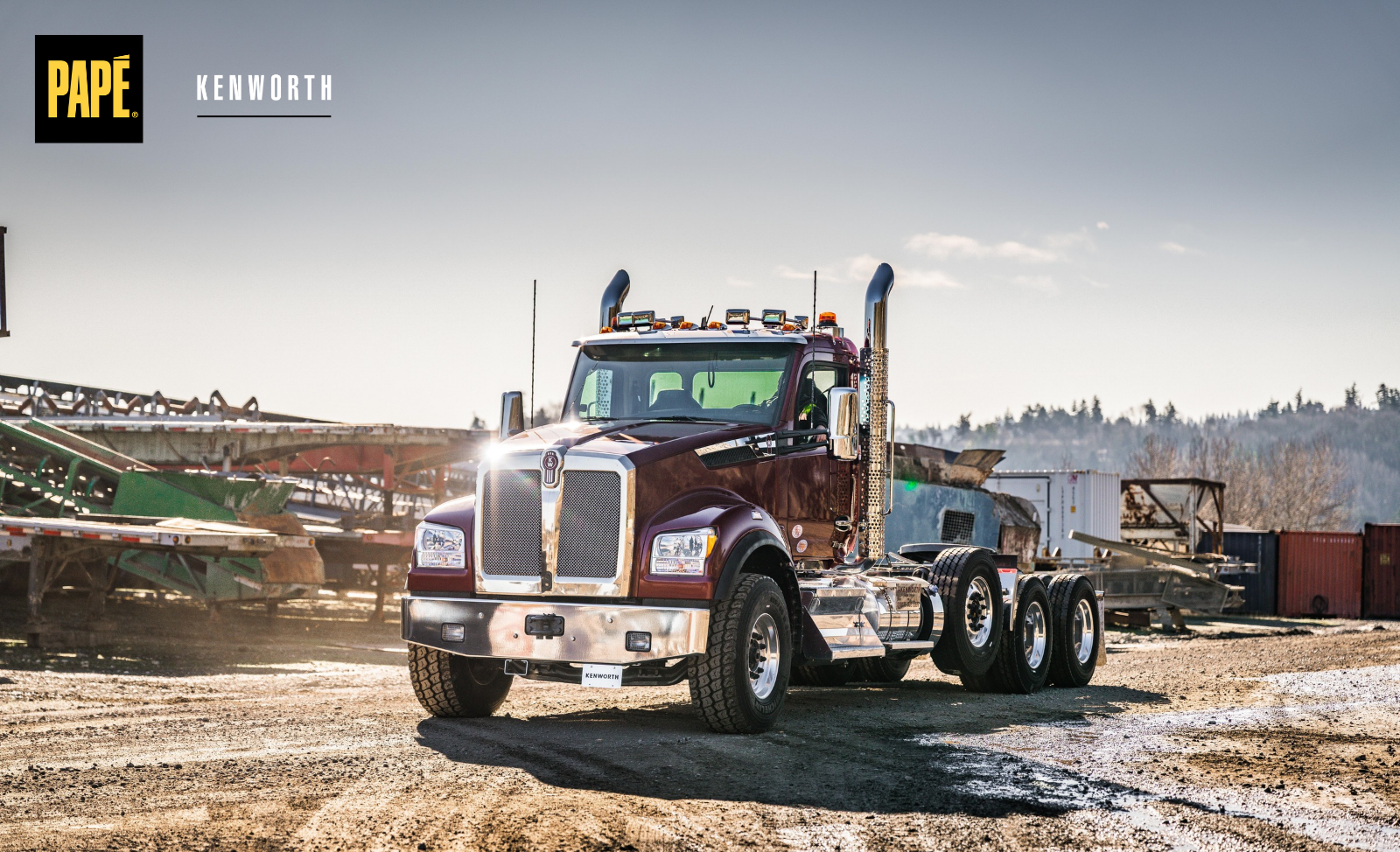
In this comparison, the T880 refers to the set-back front-axle configurations, while the T880S identifies the set-forward configuration. The T880 family includes multiple hood arrangements, so “T880 vs. T880S” is not a comparison of two fixed specifications.
Moving the front axle forward can increase the distance between the first and last axles for a comparable overall truck length. That makes the T880S especially relevant when axle spacing and bridge requirements constrain a build.
Where the T880 Fits
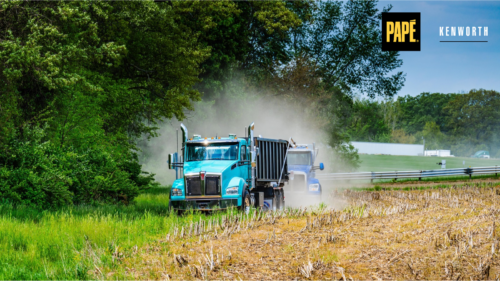
Kenworth describes its MX-Optimized set-back configuration as a maneuverable solution designed to balance weight distribution and body-mounting flexibility. That makes it worth evaluating when your priorities include jobsite access and matching the chassis to specialized equipment.
For dump, tanker, refuse, or bulk-haul work, start by comparing the proposed wheelbase and body layout against your actual operating conditions. Request a turning-path evaluation rather than assuming every set-back truck will outmaneuver every set-forward truck.
A truck serving tight urban sites has a different operating profile from one spending most of its shift moving material over open haul roads. Let that difference shape the specification.
Where the T880S Fits
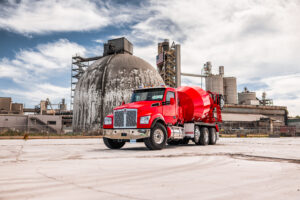
The T880S deserves particular attention for ready-mix and dump operations, where legal payload limits and axle spacing can directly impact profitability. Kenworth specifically identifies these as applications where its set-forward configuration supports bridge-formula requirements.
The Federal Bridge Formula considers axle count and spacing when determining allowable weight for axle groups on Interstate highways. More spacing can help, but it does not eliminate other weight limits or automatically increase legal payload.
Ask for a loaded axle-weight analysis of the complete truck, including the body, fuel, driver, tools, and auxiliary equipment. Evaluate all relevant axle groups and confirm the rules for the intended routes.
NOTE: Rated capacity is not the same as legal carrying capacity.
For a mixer fleet, the useful comparison is not simply drum capacity. Ask how much material each completed configuration can carry without exceeding a steer-axle, drive-axle, axle-group, or route limit, and compare the results side by side.
Heavy Haul? Compare Hood Options
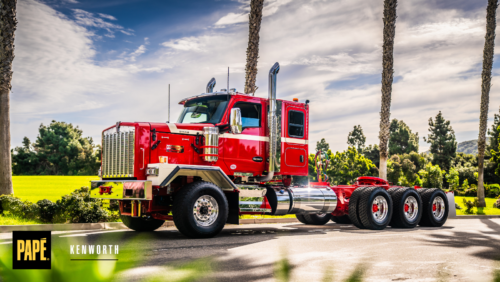
Do not rule out the T880S for high-power applications. The T880S Performance Hood expands its suitability for heavy haul, logging, and other demanding work. Kenworth offers this configuration with a larger cooling package and Cummins X15 ratings up to 605 horsepower and 2,050 lb.-ft. of torque.
For a comparable overall length, Kenworth reports a 16-inch increase in axle spread over a set-back T880. Have your dealer determine whether that extra spacing benefits the specific body and route combination you are considering.
Those figures apply to the appropriate Performance Hood specification—not every T880S. Compare cooling requirements, engine ratings, gearing, and expected operating weight together. Buying the highest horsepower rating is not a substitute for matching the whole truck to the duty cycle.
Spec the Complete Truck, Not Just the Chassis
Bring your body builder into the discussion before finalizing the order. Review mounting space, loaded weight distribution, power take-off requirements, hydraulic equipment, and service access. Ask how each proposed layout accommodates the body you intend to use.
It’s also important to evaluate driver visibility, ease of entry and exit, and control placement during a typical workday. Discuss loaded grades, frequent starts, unpaved surfaces, and unloading conditions rather than relying on highway performance alone.
Have competing quotes use the same body, payload target, fuel allowance, and operating assumptions. Otherwise, a lighter engine, different tank package, or altered axle arrangement may explain the apparent payload or price advantage more than the front-axle position itself.
For an existing fleet, bring current scale tickets and driver feedback. Use them to identify what the replacement truck needs to improve.
Build Around Your Work with Papé Kenworth
Contact your local Papé Kenworth team to explore our vocational trucks and further compare T880 and T880S configurations. Our team can help you evaluate available trucks or plan a custom build around your body, payload, terrain, and specific daily operating needs.