



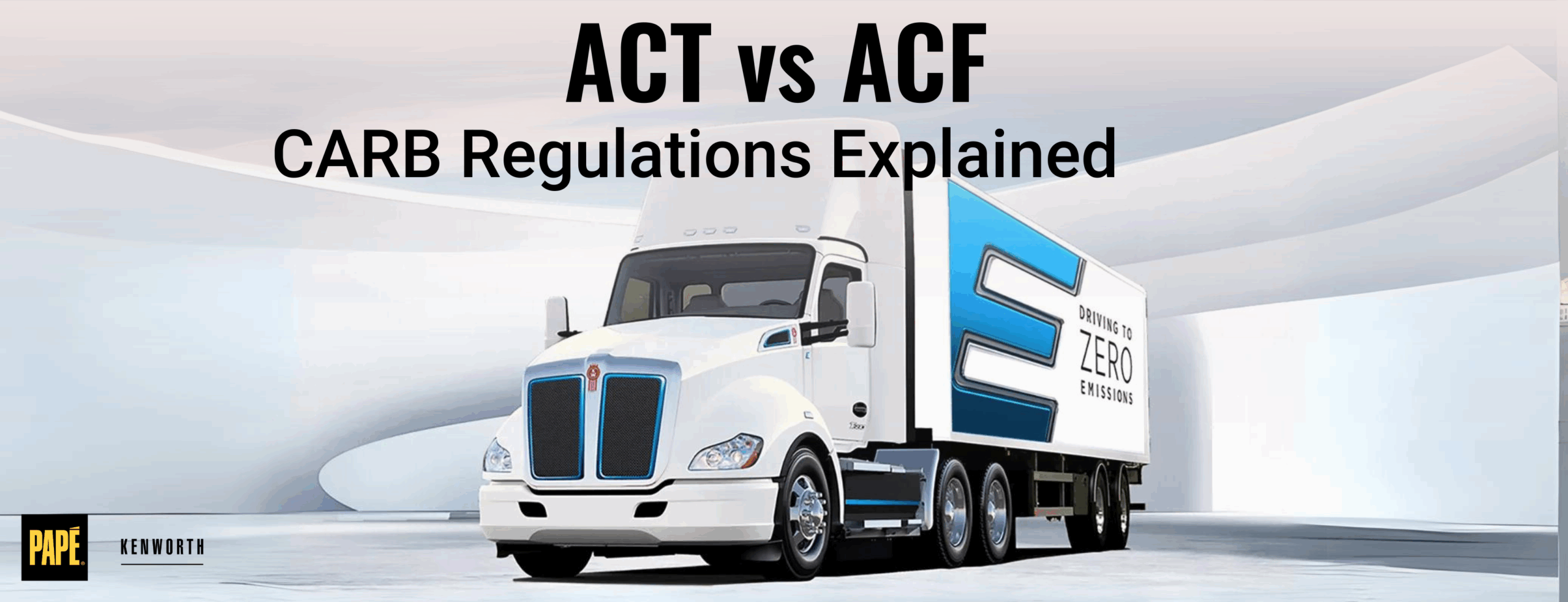
As the landscape of trucking evolves, so do the regulations governing it. The California Air Resources Board (CARB) has introduced stringent regulations aimed at reducing emissions from medium- and heavy-duty vehicles. While these regulations are meant to help environmental sustainability, they also carry significant implications for companies operating any type of medium- and heavy-duty vehicles in the state.
What is the difference between ACT and ACF?
Advanced Clean Trucks (ACT) Program
The Advanced Clean Trucks (ACT) program is a set of regulations introduced by CARB that requires manufacturers to gradually transition towards producing and selling zero-emission medium- and heavy-duty trucks. Essentially, this means that truck manufacturers must start making more electric or hydrogen-powered trucks instead of those that run on diesel or gasoline. By 2036, manufacturers will be required to sell only zero-emission trucks in the state of California.
Advanced Clean Fleets (ACF) Regulation
The Advanced Clean Fleets (ACF) regulation is another rule introduced by CARB. This regulation applies to various types of companies that own and/or operate groups of trucks in California, including delivery companies, trucking firms, as well as specific segments such as drayage operations, high-priority fleets, and state/local agencies. It’s important to note that the scope of the ACF regulation varies depending on the fleet component. For instance, the high-priority regulation sets thresholds, exempting smaller fleets from compliance unless they meet specific criteria, such as having 50+ medium/heavy-duty vehicles or $50 million in sales. This nuanced approach means this regulation is more relevant to our customers, as it targets fleet operators.
In summary, the ACT program, despite being a manufacturer obligation, is now directly impacting fleets. Manufacturers are implementing measures that control access to diesel fuel until dealers start selling zero-emission trucks to fleets. This strategy essentially involves manufacturers limiting the supply of diesel trucks to force demand for zero-emission alternatives. On the other hand, the ACF regulation targets companies with truck fleets, mandating the inclusion of more zero-emission vehicles before permitting the purchase of new diesel trucks. Ultimately, these regulations represent a significant shift in the industry towards greener transportation practices.
Navigating the Transition
As CARB regulations come into effect, companies must navigate the transition towards electrification strategically. At Papé Kenworth, we are committed to supporting our customers through this transition. Our team of experts is here to help you understand the impact of CARB regulations on your fleet and identify opportunities for a smoother transition to zero-emission vehicles.
Are you ready to navigate the transition towards a cleaner, more sustainable fleet? Contact us at Papé Kenworth for a free fleet analysis today and learn more about any grants to which you may qualify. Don’t wait until the money runs out!